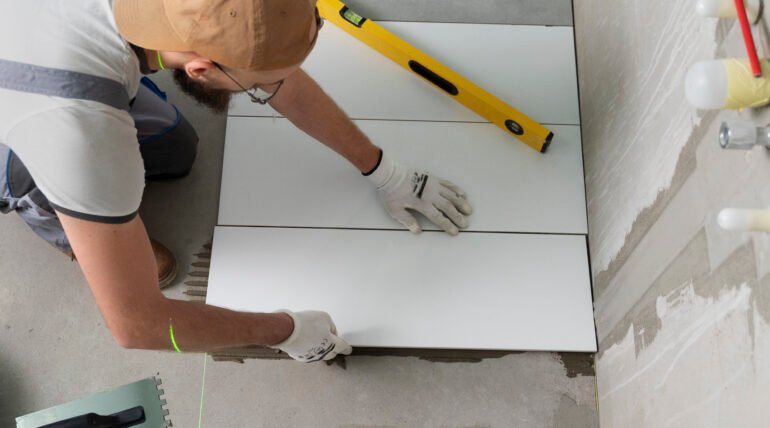
If you have been looking at modern interiors lately, you have probably noticed that tiles are getting bigger – way bigger. Large-format tiles make spaces look clean, seamless, and incredibly polished. But they also come with their own set of rules.
Whether you are planning a new build, a renovation, or specifying materials for a project, understanding large-format tile fixing is important before a single tile goes on the floor or wall.
What Exactly Is a Large Format Tile?
There is no single global standard, but most tile industry bodies agree that any tile with at least one side measuring 600mm (about 24 inches) or more qualifies as a large format tile.
Common large format tile sizes include:
- 1000 x 1000 mm and above – Ultra-large tiles, often used in high-end projects
- 1200 x 2400 mm – Slab-style tiles, typically used as feature walls or countertops
- 1600*3200 mm – Extra-large slab tiles, typically used for premium wall cladding, countertops, and seamless luxury surfaces
Porcelain large format tiles are the most commonly used material at these sizes because porcelain is dense, low in water absorption, and dimensionally stable.
Why Tile Size Changes Everything About Installation
Many people don’t realize this until it’s too late. A large tile is not just a small tile made bigger. The physics are completely different.
Bigger tiles are heavier. They flex less. And they demand a much flatter, more prepared surface.
Substrate preparation for large tiles is probably the most important step in the whole process. If your floor or wall has any dips, humps, or unevenness, large tiles will bridge those gaps and crack under foot traffic or normal building movement. Industry standards generally require a maximum variation of 3mm over a 3-meter span for large format installations, and sometimes tighter.
If your substrate is not ready, your tiles will not last.
Adhesive for Large Format Tiles: Not All Adhesives Are Equal
Standard tile adhesive works fine for small tiles. But when you move into large format territory, you need a high-performance, flexible adhesive, often referred to as S1 or S2 class adhesive depending on the deformability required.
You also need to apply adhesive to both the substrate and the back of the tile. This is called the double-buttering method. It ensures full contact and eliminates hollow spots that cause cracking.
Large tiles have very little tolerance for empty pockets of adhesive underneath them. Full bed coverage, ideally 95% or more, is the goal.
Large Format Tile Fixing on Walls vs. Floors
Floor installation relies heavily on gravity working in your favor. But you still need a perfectly level substrate, the right adhesive, and tile leveling systems to keep lippage under control.
Preventing tile lippage is one of the biggest challenges with large format tiles. Lippage is when the edge of one tile sits higher or lower than the tile next to it. Even a 0.5mm difference becomes very noticeable at large formats.
Tile leveling systems, which use clips and wedges placed between tiles during installation, have made a huge difference here. They keep tiles aligned while the adhesive cures.
Wall installation for large format tiles adds another layer of complexity. The tiles are heavy, and adhesive alone cannot always hold them safely during the curing period. For very large tiles on walls, temporary mechanical support, special heavy-duty adhesives, and in some cases mechanical fixing brackets may be needed.
For very large-scale or façade-level work, this moves into a different territory entirely.
Tile Dimensions Guide: Choosing the Right Size for Your Project
Not every project needs the biggest tile available. Here is a simple way to think about it:
- Small rooms can actually benefit from medium-to-large tiles if the layout is done well, reducing grout lines and making the room feel open.
- Large open-plan areas are where ultra-large tiles truly shine.
- Wet areas like bathrooms need slip-rated tiles regardless of size.
- High-traffic commercial floors need tiles with appropriate thickness and PEI ratings.
The team at Fix and Fine Gulf works with architects, contractors, and developers across the UAE to help them choose the right tile format and ensure the installation is done to the highest standard, from substrate assessment to final grouting.
A Few Final Thoughts
Large-format tile fixing is not complicated once you understand the rules. It demands proper planning, the right materials, and skilled installation. Cut corners on any of those, and even the most beautiful tile will disappoint.
If you are working on a project and want to get the installation right the first time, talking to experienced tile-fixing professionals early in the process saves you a lot of pain later.
FAQs
Q1: Do large format tiles always require a leveling system?
Not always, but using a tile leveling system is strongly recommended for tiles 600mm and above. Leveling systems significantly reduce lippage and make the finished surface look much more professional. They are especially important on floors where even small height differences become very visible under raking light.
Q2: Can large format tiles be used in bathrooms and wet areas?
Yes, but you need to choose tiles with an appropriate slip resistance rating. You also need to ensure the waterproofing membrane beneath the tiles is properly applied before laying large format tiles in wet areas. The adhesive must also be fully waterproof rated for those environments.
Q3: How thick should large format tiles be?
Most large format porcelain tiles range from 9mm to 20mm in thickness. Thicker tiles, typically 12mm and above, are better for high-traffic floors and outdoor use. Very thin large format tiles, sometimes called slim or gauged tiles, require special handling and installation techniques to avoid cracking during laying.
We deliver high-quality tile application services with a commitment to precision and excellence. Through dedication and attention to detail, we ensure every project is completed to the highest standards.
