When you look at a tall building with a beautiful stone or tile exterior, it is easy to think about how it looks. What you probably do not think about is what is keeping it in place.
Wind, height, movement, temperature change – these are forces working on that façade every single day. And if the façade tile and stone fixing system behind those tiles was not designed to handle them, the consequences can be serious.
This blog is written for the people making those decisions. If you are an architect, façade consultant, structural engineer, or developer working on mid-rise or high-rise exteriors, this one is worth reading carefully.
How Wind Load on Building Façade Actually Works
Wind does not just push against a building. It creates both positive pressure on the windward side and negative pressure, or suction, on the leeward side and around corners.
On lower buildings, this effect is manageable. But as building height increases, wind speed increases significantly. At 200 meters, wind pressures can be three to four times greater than at ground level.
This matters enormously for façade tile and stone fixing because the cladding system must resist both positive and negative wind loads without the tiles or panels detaching.
A tile that is bonded with adhesive alone may handle moderate conditions. But at height, adhesive-only systems become a serious risk factor. This is why mechanical fixing systems exist.
Façade Tile and Stone Fixing Systems: Adhesive vs. Mechanical
There are two broad approaches to fixing exterior tiles and stone to building façades:
Adhesive fixing uses a high-performance exterior adhesive to bond tiles directly to the substrate or render. It is suitable for lower-rise buildings and tiles with smaller formats where the loads are manageable.
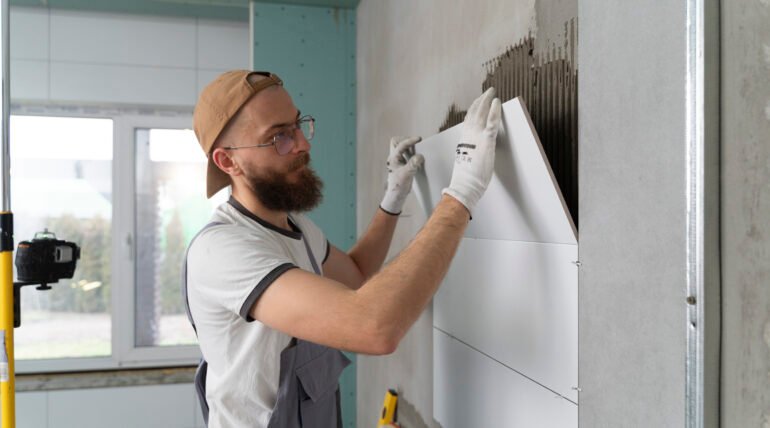
Mechanical fixing uses anchors, brackets, and a sub-frame system to physically attach stone or large tile panels to the building structure. The tile is held mechanically, not just by adhesive bond.
On high-rise buildings, mechanical fixing is not optional. It is the standard.
Mechanical fixing systems for stone cladding typically involve:
- Anchor points drilled into the substrate or structural frame.
- Stainless steel brackets and rails.
- Stone or tile panels with precision-cut slots or undercut anchors.
- A ventilated cavity between the panel and the wall.
This ventilated cavity is important. It allows moisture to drain and air to circulate, which dramatically improves the long-term performance of the façade.
Why Building Height Cladding Design Is More Complex Than It Looks
Height changes everything in façade engineering for a few reasons.
Wind speed increases with height.
Most building codes and façade engineering standards use wind pressure calculations based on the building’s height, exposure category, and geographic wind zone. In the UAE, this is governed by local building codes and international references like ASCE 7 or Eurocode 1.
Thermal movement becomes a bigger factor.
A tall building expands and contracts more than a short one. The façade fixing system must accommodate this movement without cracking tiles or loosening anchors. Properly designed bracket systems include movement joints for exactly this reason.
Access for maintenance and replacement is harder.
If a tile at height comes loose and needs replacing, the cost and complexity are significant. Getting the fixing system right the first time is far cheaper than emergency repairs later.
Facade safety standards are strict for good reason.
Dropped or detached cladding at height is a life safety issue. Local authorities and insurance requirements in the UAE mandate rigorous engineering sign-off for high-rise façade systems.
Façade Anchors, Brackets, and What You Actually Need to Specify
For mechanical fixing systems, the quality of anchors and brackets matters as much as the design.
In coastal and humid environments like the UAE, all metal components must be marine-grade stainless steel. Inferior fixings corrode quickly, and corroded fixings fail.
The anchor pattern, spacing, and embedment depth all need to be calculated based on the actual wind load for the specific building and location. This is not something to estimate or copy from another project. Each project needs proper structural calculations.
Stone panels need to be tested for their own structural capacity. Thin stone panels that look identical to thick ones can behave very differently under sustained wind load.
The team at Fix and Fine Gulf provides technically sound façade tile and stone fixing solutions across the UAE, working closely with façade engineers and contractors to ensure every system is designed and installed to meet the project’s specific load requirements and safety standards.
Exterior Cladding Installation Methods: A Quick Reference
Here is a simplified overview of what installation method is appropriate at different building heights:
- Up to 4 floors: Adhesive fixing with proper exterior-grade adhesive may be suitable for smaller tiles and lightweight stone.
- 4 to 12 floors: Hybrid systems combining adhesive with additional mechanical restraint are common.
- 12 floors and above: Full mechanical fixing with engineered sub-frame systems is generally required.
- All heights: Substrate preparation, waterproofing, and movement joints are non-negotiable.
Every project is different, and these are general guides only. Proper engineering assessment is always needed.
Bringing It All Together
Façade tile and stone fixing at height is serious engineering work. It sits at the intersection of architecture, structural engineering, and materials science. And it has real safety consequences if done wrong.
The goal is a façade that looks exactly as intended on day one and still performs the same way 20 years later, regardless of what the wind does.
If you are in the planning or design stage of a mid-rise or high-rise exterior, bringing in experienced façade fixing specialists early in the process makes every subsequent step easier and safer.
FAQs
Q1: What wind load standards apply to façade tile fixing in the UAE?
The UAE follows its own national building codes, which reference international standards including ASCE 7 and Eurocode 1 for wind load calculations. Façade engineers calculate site-specific wind pressures based on building height, location, and exposure category. All mechanical fixing systems must be designed and certified to meet these calculated loads before installation.
Q2: How are stone panels tested for façade safety before installation?
Stone panels used in façade systems are typically tested for flexural strength, anchor pull-out resistance, and freeze-thaw durability. Testing follows international standards and is usually carried out at certified laboratories. Panels must also be checked for natural variations in the stone that could affect structural performance at height.
Q3: Can existing adhesive-fixed façade tiles be upgraded to mechanical fixing?
It depends on the existing structure. In some cases, a mechanical sub-frame system can be installed over or around existing cladding. In others, full removal and reinstallation is required. A façade engineering assessment is the first step. Attempting to add mechanical anchors without proper evaluation can damage the underlying structure.
We deliver high-quality tile application services with a commitment to precision and excellence. Through dedication and attention to detail, we ensure every project is completed to the highest standards.
