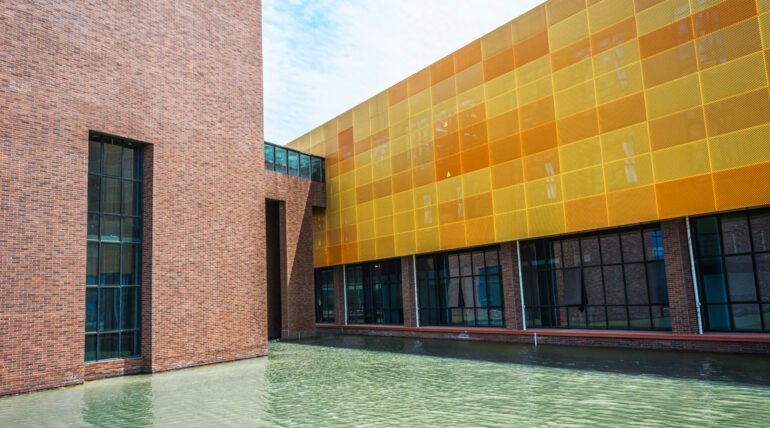
Large-format porcelain and natural stone can completely change the look of a building. A few large panels can create the clean, uninterrupted finish that architects want, without filling the façade with small tiles and visible fixing points. But there is a practical question behind that finish: How are those large panels going to stay securely in place? That question becomes even more important on an exterior façade. Panels are exposed to wind, heat, moisture, temperature changes, and the constant demands of the building environment. This is where an undercut anchor system can make sense. It provides a concealed mechanical way of fixing suitable stone and porcelain panels to a supporting façade structure, keeping the fixing hidden while giving the panel a secure connection.
What Is an Undercut Anchor System?
An undercut anchor system is a concealed mechanical fixing method used to attach stone, porcelain, and other suitable façade panels to a supporting structure. Instead of fixing through the visible face of the panel, the connection is made from the rear. A specially prepared hole is formed in the back of the panel, allowing an undercut anchor to engage with the material. The anchor is then connected to the supporting façade system. Once the panel is installed, the fixing is hidden from view. That simple difference has a big impact on the finished appearance. There are no obvious screws or surface-mounted clips interrupting the face of the stone or porcelain.
Why Is Undercut Fixing Useful for Large-Format Façades?
Large panels look simple once they are installed. Getting them there safely is another matter. A large-format panel can have considerable weight and surface area. On an exterior wall, it also has to deal with forces that would not normally affect an interior tile in the same way. The fixing system therefore has to be selected around the actual panel and project rather than chosen simply because it is commonly used. An undercut fixing arrangement provides a mechanical connection at the rear of the panel. For suitable materials and properly engineered applications, this can offer a practical way to combine a clean appearance with mechanical retention.
How Does an Undercut Anchor System Work?
The process starts with accurately preparing the rear of the panel. The fixing holes are positioned according to the approved design and the requirements of the selected anchor system. The hole geometry is important because the anchor needs to engage correctly with the panel. Once the anchor is installed, it forms the connection between the panel and the supporting façade structure. The panel can then be positioned on the building and secured as part of the complete mechanical fixing arrangement.
The details vary between systems and materials, so installation should follow the relevant manufacturer’s specifications and project engineering requirements.
Why Choose Concealed Mechanical Fixing for Porcelain and Stone?
The visual side of façade design matters. Nobody wants to spend heavily on premium marble or large-format porcelain only to have the finished surface dominated by visible hardware. Concealed fixing avoids that problem. The panel face remains clean, while the mechanical connection sits behind it. This is particularly useful for contemporary buildings where large uninterrupted surfaces are part of the architectural concept. It can also give designers more flexibility when working with premium materials and carefully planned panel layouts.
Can an Undercut Anchor System Be Used With Large-Format Porcelain?
Yes, suitable large-format porcelain panels can be mechanically fixed using undercut anchoring systems when the panel and system are properly specified for the application. Porcelain is popular for façades because it can provide the appearance of stone while offering a broad selection of colours, textures, and finishes. However, not every porcelain panel should automatically be fixed using the same method. Panel thickness, dimensions, material characteristics, fixing positions, support conditions, and project loads all need to be considered before installation. That is why façade fixing should be planned alongside material selection rather than left until the installation stage.
What About Marble, Granite and Natural Stone?
Natural stone has been used on building façades for generations, but modern projects often use much larger pieces than traditional stonework. Marble and granite can also be heavy. Their natural characteristics can vary, which makes proper fixing design particularly important. With an undercut anchor system, the fixing point is prepared at the rear of the stone. This allows the finished face to remain free from visible mechanical hardware.
The anchor arrangement should be selected according to the specific stone, its dimensions and thickness, and the requirements of the façade design.
Undercut Anchors vs. Adhesive Fixing: What Is the Difference?
The main difference is how the panel is retained. Adhesive fixing relies on a bonded connection between the tile or panel and the surface behind it. Mechanical fixing uses physical components to connect the panel to a supporting structure. Neither approach is automatically suitable for every situation. Interior and exterior applications have different requirements, and large-format façade panels can present additional mechanical considerations. For demanding exterior applications, mechanical fixing can be particularly useful where the design calls for a concealed connection and positive mechanical retention. In some systems, different fixing or bonding methods may also be used together. The correct arrangement depends on the project design.
What Are the Main Benefits of an Undercut Anchor System?
For suitable façade applications, an undercut anchor system can offer several advantages.
Concealed appearance: The fixing remains behind the panel, helping maintain a clean architectural finish.
Mechanical retention: The panel is connected to the supporting structure through a physical fixing system rather than relying only on surface adhesion.
Large-format compatibility: The approach can be suitable for appropriately specified large-format porcelain and stone panels.
Design flexibility: Concealed fixing can work well with modern façade designs where visible hardware is undesirable.
Maintenance considerations: Depending on the complete system, individual panels may be accessible for replacement or maintenance.
These benefits explain why concealed mechanical fixing is often considered for premium façade applications.
Where Are Undercut Anchor Systems Commonly Used?
The system can be considered for a range of projects where large-format exterior panels and concealed fixing are required.
Typical applications include:
- High-rise residential buildings
- Commercial and office developments
- Hotels and hospitality projects
- Luxury villas and residential façades
- Natural stone cladding
- Large-format porcelain façades
- Architectural feature walls
- Façade renovation and replacement projects
The suitability of the system depends on the building and the proposed cladding rather than the project type alone.
Why Does Installation Quality Matter?
Even a well-designed fixing system can perform poorly if it is installed incorrectly. The rear holes need to be accurately prepared. Anchors must be installed correctly, panels need careful handling, and the supporting structure has to be properly aligned. This becomes particularly important with large-format panels. A damaged corner or incorrectly prepared fixing point can create problems before the panel even reaches the wall. Experienced installers understand that façade work is not just about attaching panels. It involves planning, accurate setting out, material handling, fixing, alignment, and coordination with the wider construction team. Fix and Fine Gulf provides mechanical tile fixing and façade installation services in Dubai and across the UAE. Its services include undercut anchor systems, rail systems, kerf-cut fixing, and other mechanical solutions for materials such as large-format porcelain, granite, marble, terracotta, and high-density ceramic.
Is an Undercut Anchor System Right for Your Project?
That depends on the panel and the building. Before choosing an undercut fixing solution, a project team should consider the panel’s material, dimensions, thickness, weight, fixing locations, substrate, building height, wind exposure, and supporting structure. The façade design should also establish how the panels will be installed, aligned, accessed, and maintained. For a new project, involving the façade fixing specialist early can prevent many installation problems later. For an existing building, the condition of the substrate and the proposed replacement panels also need to be assessed before deciding on the fixing method.
Build a Cleaner, More Secure Large-Format Façade
Large-format stone and porcelain deserve more than a fixing method chosen as an afterthought. The right system needs to work with the material, building structure, architectural design, and installation conditions. An undercut anchor system can provide a concealed mechanical fixing solution for suitable façade panels while preserving the clean appearance modern projects demand. If you are planning a large-format porcelain or natural stone façade in Dubai or elsewhere in the UAE, Fix and Fine Gulf can help you assess the appropriate mechanical fixing approach for your project.
Contact Fix and Fine Gulf to discuss your façade requirements and find a suitable fixing solution for your stone or porcelain panels.
Frequently Asked Questions
What is an undercut anchor system used for?
An undercut anchor system is used to mechanically secure suitable stone, porcelain, and other façade panels from the rear while keeping the fixing concealed from the finished surface.
Is an undercut anchor system suitable for large-format porcelain?
Yes, an undercut anchor system can be suitable for large-format porcelain when the panel, anchor, support structure, and project requirements have been properly assessed.
Are undercut anchors visible after installation?
No, undercut anchors are designed to create a concealed fixing connection behind the panel, so the finished façade can maintain a clean external appearance.
Is mechanical fixing better than adhesive for exterior façades?
Mechanical fixing can be advantageous for exterior façades because it provides a physical connection to the supporting structure, but the appropriate method depends on the panel, building, loads, and engineered façade design.
Can undercut anchors be used with natural stone?
Yes, suitable natural stone such as marble and granite can be mechanically fixed using undercut anchors when the stone characteristics and fixing requirements are properly evaluated.

We deliver high-quality tile application services with a commitment to precision and excellence. Through dedication and attention to detail, we ensure every project is completed to the highest standards.
