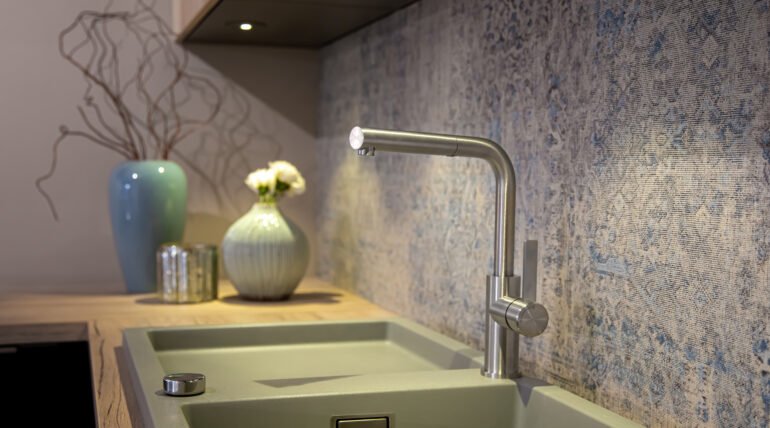
Tile works best on kitchen countertops and bathroom vanity tops when it’s used on flat, stable surfaces that see daily wear but still need to look polished. We see this question a lot from homeowners and designers across Dubai who want surfaces that hold up to spills, heat, and constant use without losing their finish. A well-planned bathroom vanity and kitchen counter tile application gives you both durability and design flexibility, and it works on new builds, renovations, and hospitality fit-outs alike.
If you’re picturing a countertop that photographs well and still survives a busy household, tile is worth a real look. Let’s walk through exactly where it fits, what it can do, and how we approach it.
Which Kitchen Countertop Areas Benefit Most from Tile Application
Kitchen islands, main prep counters, and breakfast bars are the spots where a kitchen countertop tile application really shines. These are high-traffic zones. People chop, spill, and set down hot pans here every single day. Tile handles that pressure better than many people expect, especially when it’s sealed and installed correctly. We also install tile on backsplash-to-countertop transitions, giving kitchens a seamless look from the wall down to the work surface. This is popular in villa kitchens and open-plan layouts where the counter is part of the overall visual flow, not just a functional slab. Large format porcelain slabs and natural stone-look tiles are especially requested for this reason. Small kitchenettes in staff quarters, guest suites, or rental units are another spot where tile makes sense. It’s budget-friendly compared to solid stone, yet it still looks intentional and clean.
Where Bathroom Vanity Tile Application Makes the Biggest Difference
Bathroom vanity tops take a different kind of daily abuse. Water, toothpaste, makeup, and constant humidity all test the surface. A bathroom vanity tile application handles moisture well when it’s installed with the right adhesive and grout system, which is something we check on every project. Single and double vanity counters are the most common request we get, especially in master bathrooms and hotel guest rooms. Tile lets us match the vanity top to the flooring or shower walls, so the whole bathroom reads as one design instead of separate pieces stitched together. We also work on powder room vanities, where a bolder tile pattern can make a small space feel more designed without needing a full renovation. Property managers and hotel operators often choose this option because it refreshes a space quickly without a long shutdown period.
What Tile Types Work Best for Countertop and Vanity Applications
Not every tile is built for horizontal, high-use surfaces. Porcelain tile is our most recommended option for kitchen and bathroom counter tile application projects because it resists scratching, staining, and heat far better than ceramic. It also comes in large formats now, which cuts down on visible seams. Natural stone tile, like granite or marble-look porcelain, gives a premium finish for villas and hospitality projects. It does need periodic sealing, and we always explain that upfront so there are no surprises later. Glass and mosaic tiles work well as accents but aren’t ideal for the entire countertop surface. We usually pair them with a stronger base tile for durability, then use the decorative tile as a border or feature strip.
Why Professional Installation Matters for Countertop and Vanity Tiles
Countertop tile installation services need more precision than wall or floor tiling. Edges have to be finished cleanly, corners need to be watertight, and the surface has to stay level so nothing wobbles or catches on grout lines. A slightly uneven install on a wall is easy to miss. On a counter, you’ll notice it every single day. Grout choice matters just as much here. We use epoxy or stain-resistant grout on countertop and vanity applications specifically because these surfaces deal with oil, makeup, and water more than any other tiled area in the home. Regular grout wears out fast in these spots and starts looking dull within months. Sealing is another step people skip when they try a DIY approach. We seal every tile applications for kitchen and bathroom surfaces project so the finish stays resistant to stains and bacteria buildup, which matters a lot in food prep and bathroom areas.
How We Approach Every Countertop and Vanity Project
We start with a site visit so we can measure accurately and check the substrate underneath. This step alone prevents most of the problems people run into with countertop tiling, like uneven surfaces or poor adhesion later on. From there, we help clients choose tile size, finish, and layout based on how the space is actually used, not just how it looks in a showroom. A busy family kitchen needs different grout and tile choices than a guest bathroom that sees light use. We work with homeowners, interior designers, developers, and hotel operators across Dubai and the wider UAE, so we’re used to adjusting our process for both residential homes and larger commercial fit-outs.
If you’re planning a renovation or a new build and want services related to bathroom vanity and kitchen counter application, we’re happy to walk you through options that fit your space and your budget.
Frequently Asked Questions
Is tile a good choice for kitchen countertops in a busy household?
Yes, tile works well in busy kitchens when it’s porcelain or sealed natural stone and installed with proper grout. It resists heat, scratching, and daily wear better than many people assume, and it holds up under regular cooking and cleaning routines without losing its finish.
How long does a bathroom vanity tile application usually take to complete?
Most bathroom vanity tile projects take between two to four days, depending on the size of the vanity and whether plumbing needs to be adjusted. Drying and sealing time also factor in, so rushing this step usually leads to weaker results later.
Can tile countertops match existing bathroom or kitchen flooring?
Yes, tile makes it easy to match or coordinate countertops with existing flooring, walls, or shower tiles. This creates a connected, intentional look throughout the room instead of surfaces that feel randomly paired together.
What maintenance does a tiled countertop or vanity top need over time?
Tiled surfaces need regular cleaning with non-abrasive products and occasional resealing, especially for natural stone. Grout lines should be checked yearly for wear, since that’s usually the first part of the surface to show age.
Does tile countertop installation work for commercial or hospitality spaces?
Yes, tile is a common choice for hotel bathrooms, staff kitchens, and rental units because it’s durable and cost-effective at scale. It also allows property managers to refresh spaces quickly without long shutdown periods during renovations.
We deliver high-quality tile application services with a commitment to precision and excellence. Through dedication and attention to detail, we ensure every project is completed to the highest standards.
